
Many small business owners realize too late that their logo is holding them back. Maybe your current logo looks generic, doesn’t scale well, or simply doesn’t reflect your brand’s personality. A weak logo can confuse potential customers, make your business look unprofessional, or even cause you to miss out on sales. If you’re planning to launch or refresh your brand in 2024, getting your logo right is a crucial step.
Why Your Logo Matters More Than You Think
Your logo is often the first thing people notice about your business. It sets the tone for your branding graphics, website, packaging, and social media. A strong logo helps customers remember you and builds trust from the start. On the other hand, a poorly designed logo can make even the best products or services seem less credible.
For small businesses and startups, a logo isn’t just a decorative mark, it’s a core part of your visual identity. It should communicate what makes your business unique and be flexible enough to work across different platforms and materials.
Key Elements of Effective Logo Design for Small Business
Before you start sketching ideas or hiring a designer, it’s helpful to understand what makes a logo work. Here are the main elements to focus on:
- Simplicity: Simple logos are easier to recognize and remember. Avoid clutter, unnecessary effects, or overly complex graphics.
- Relevance: Your logo should reflect your industry, values, and target audience. A playful logo may work for a toy shop but not for a law firm.
- Scalability: The logo must look good on a business card, website, social media profile, or even a billboard. Test your design at both small and large sizes.
- Timelessness: Following design trends can date your logo quickly. Aim for a look that will still feel fresh in five or ten years.
- Versatility: Your logo should work in color, black and white, and on both light and dark backgrounds.
Common Mistakes Small Businesses Make With Logos
Even with the best intentions, it’s easy to make mistakes that weaken your logo. Watch out for these pitfalls:
- Copying Competitors: Imitating another business’s logo can confuse customers and make your brand forgettable.
- Using Clip Art or Stock Icons: These can make your brand look generic and unprofessional.
- Overcomplicating the Design: Too many details or colors can make a logo hard to reproduce and recognize.
- Ignoring Brand Strategy: A logo should be based on your brand’s values, mission, and audience, not just what looks nice.
- Skipping Professional Help: DIY logos may seem quick and cheap, but they often lack polish and flexibility for future growth.
Step-by-Step Process to Create a Standout Logo
Building a logo that truly defines your business involves more than picking a font or icon. Follow this process to get results you can be proud of:
1. Clarify Your Brand Identity
Start by defining what your business stands for. What are your core values? Who is your target customer? What makes your business different? Write down keywords and phrases that capture your brand’s personality. This foundation will guide every design decision.
2. Research Competitors and Industry Standards
Look at logos from similar businesses, both locally and nationally. Notice what works and what doesn’t. This helps you avoid accidental similarities and spot opportunities to stand out. Pay attention to color schemes, shapes, and styles that are common in your industry.
3. Brainstorm and Sketch Concepts
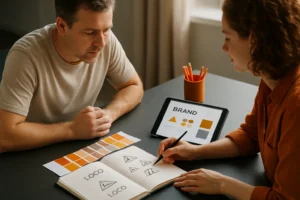
Start with rough sketches. Focus on shapes, symbols, and letterforms that connect to your brand identity. Don’t worry about making them perfect yet. This stage is about exploring ideas and finding a direction that feels authentic.
4. Choose Your Colors and Fonts Carefully
Color and typography play a big role in how your logo is perceived. For example:
- Blue often signals trust and professionalism.
- Green can suggest growth or eco-friendliness.
- Orange feels energetic and creative.
Pick one or two main colors and a font that matches your brand’s tone. Avoid trendy fonts that may look dated quickly.
5. Create Digital Drafts
Turn your best sketches into digital versions using design software. Test different layouts, color variations, and font pairings. Make sure your logo is legible and balanced at different sizes.
6. Get Feedback From Real People
Show your logo drafts to trusted colleagues, friends, or even loyal customers. Ask what feelings or associations the logo brings up. Look for honest reactions, not just compliments. This step can reveal issues you might have missed.
7. Refine and Finalize
Use the feedback to make improvements. Simplify where possible, adjust spacing, and check that the logo works in black and white. Prepare final files in multiple formats (SVG, PNG, JPG) for different uses.
Branding Graphics for Startups: Beyond the Logo
Your logo is just one piece of your visual identity. Consistency across all branding graphics, from business cards to social media posts, helps build recognition and trust. Here’s how to keep your brand cohesive:
- Develop a color palette and stick to it across all materials.
- Use the same fonts and logo variations everywhere.
- Create templates for social media, presentations, and print materials.
- Document your visual identity guidelines so everyone on your team stays aligned.
If you need help creating a full set of professional business logos and branding assets, consider working with a design agency that understands the needs of startups and small businesses. See how graphic design services can support your brand.
Visual Identity Design Tips for Small Businesses
Building a strong visual identity goes beyond the logo itself. Here are some practical tips:
- Stay Consistent: Use the same logo, colors, and style across all platforms.
- Think About Application: Make sure your logo looks good on social media, your website, packaging, and merchandise.
- Prepare Multiple Versions: Have horizontal, vertical, and icon-only versions for different uses.
- Don’t Forget Favicon and App Icons: Small details like these help keep your brand recognizable online.
When to Update or Redesign Your Logo
If your current logo feels outdated, doesn’t reflect your business anymore, or is hard to use across different platforms, it may be time for a refresh. Signs you need a new logo include:
- Major changes in your business focus or audience
- Negative feedback about your branding
- Difficulty using your logo in digital or print formats
- Similarity to competitors or generic stock icons
A thoughtful redesign can help you reconnect with your customers and signal positive change.
Choosing a Professional for Your Logo Design
While online logo makers and templates may seem tempting, a professional designer brings experience and a strategic approach. Here’s what to look for:
- Portfolio of past work with small businesses or startups
- Understanding of branding, not just graphic skills
- Clear process for revisions and final file delivery
- Ability to create supporting graphics for social media and business needs
Ask about their process, timelines, and what’s included. A good designer will help you think through your brand’s needs, not just deliver a logo file.
Checklist: Before You Approve Your Logo
- Does it reflect your brand’s personality and values?
- Is it simple, memorable, and scalable?
- Does it work in color and black and white?
- Is it unique and distinct from competitors?
- Do you have all the necessary file formats and variations?
Conclusion: Building a Brand That Lasts
A standout logo is a smart investment for any small business. It sets the foundation for your visual identity and helps you connect with customers at every touchpoint. If you want guidance on logo design, branding graphics, or building a consistent visual identity, WebVerse Solution offers practical support for small businesses and startups.
FAQs
How much should a small business expect to pay for a professional logo?
Logo design costs vary widely. A small business may pay anywhere from $250 to $2,000 or more, depending on the designer’s experience, project complexity, and what’s included in the package.
How long does it take to design a logo for a small business?
Most logo projects take between 1 and 4 weeks, depending on the number of concepts, revisions, and the designer’s process. Timelines may be shorter or longer based on your needs.
What file formats should I receive for my new logo?
Request vector files (such as SVG or EPS) for scalability, as well as PNG and JPG for web and print use. You may also want black and white or icon-only versions.
Can I use my logo on social media and print materials?
Yes, a well-designed logo should work on social media profiles, business cards, packaging, and other materials. Ask your designer for versions suited to different uses.